Should Roofers Hire an SEO Agency or In-House Marketer? A Complete Comparison

As roofing companies grow, marketing decisions get more complex. One of the biggest questions owners face is whether to hire an SEO agency or build an in-house marketing role. Both options can work—but they serve very different business stages, budgets, and growth goals.

This article breaks down a clear, roofing-specific comparison so you can decide which approach makes the most sense for your company.

Why This Decision Matters for Roofing Companies

SEO isn’t a one-time task. It’s an ongoing system that impacts:

  • Lead volume and quality
  • Cost per acquisition
  • Market expansion into new cities
  • Dependence on paid leads

Choosing the wrong setup can stall growth or waste months of budget.

Before comparing options, it’s important to understand what a proper roofing SEO system actually includes. That foundation is outlined at https://roofseo.net/services/.

What an In-House SEO Marketer Typically Handles

An in-house marketer usually focuses on execution and daily tasks.

Common responsibilities:

  • Updating website pages
  • Writing or managing blog content
  • Posting updates to Google Business Profile
  • Basic keyword research
  • Coordinating with sales or operations

This role works best when the strategy is already defined and the company needs consistent hands-on execution.

Pros of Hiring an In-House SEO Marketer

Full Focus on Your Business

An in-house hire works exclusively on your roofing company—no competing priorities.

Easier Internal Communication

They sit close to sales, operations, and management, making collaboration faster.

Long-Term Team Building

Over time, in-house staff can become deeply familiar with your processes, markets, and service areas.

Cons of Hiring In-House for Roofing SEO

Limited Skill Coverage

SEO requires technical SEO, content strategy, local SEO, analytics, and link building. One person rarely excels at all of it.

Higher True Cost

Salary, benefits, training, tools, and ramp-up time often exceed expectations.

Slower to Adapt

SEO changes fast. In-house marketers may lack exposure to what’s working across multiple roofing markets.

In many cases, in-house hires struggle without a proven system to follow.

What a Roofing SEO Agency Handles

A specialized roofing SEO agency brings a team—not just one skillset.

Typical agency coverage:

  • Technical SEO and site structure
  • Service and location page strategy
  • Content planning and execution
  • Local SEO and Google Business Profile optimization
  • Tracking calls, forms, and ROI

Agencies focus on systems that scale across cities and services.

Pros of Hiring an SEO Agency for Roofing

Proven Systems, Not Guesswork

Agencies work across many roofing companies and markets, allowing them to apply what already works.

Faster Results

With existing processes and tools, agencies avoid the long ramp-up period of new hires.

Broader Expertise

Instead of one person, you get access to specialists in technical SEO, content, local SEO, and analytics.

Easier Market Expansion

Agencies are especially effective for multi-location growth, supported by structured location strategies like https://roofseo.net/locations/.

Cons of Hiring an SEO Agency

Less Day-to-Day Control

You’re not managing someone internally, which requires trust and communication.

Requires Clear Goals

Agencies perform best when expectations, KPIs, and priorities are defined.

Quality Varies

Not all SEO agencies understand roofing. Generic agencies often miss local intent and service-based nuance.

Choosing a roofing-specialized agency is critical.

Cost Comparison: In-House vs Agency

While numbers vary, common patterns emerge:

In-house SEO marketer:

  • Salary + benefits
  • Tools and training
  • 3–6 months ramp-up
  • Limited skill depth

SEO agency:

  • Monthly retainer
  • Immediate execution
  • Access to full team
  • Proven workflows

For many roofers, agencies deliver more ROI at early and mid-growth stages.

When In-House Makes Sense for Roofers

Hiring in-house may be the right move if:

  • You already have a strong SEO strategy
  • You need daily execution support
  • You’re managing large content volumes
  • You have internal leadership guiding SEO direction

In-house works best when SEO is already mature.

When an SEO Agency Is the Better Choice

An agency is usually the better option if:

  • You want faster results
  • You’re expanding into multiple cities
  • You rely too heavily on paid leads
  • You need a complete SEO system—not just tasks

Agencies excel at building momentum and long-term visibility.

The Hybrid Approach Many Roofing Companies Use

Many successful roofing companies combine both:

  • Agency handles strategy, technical SEO, and scaling
  • In-house supports content, updates, and coordination

This approach delivers both expertise and internal alignment.

Educational content and ongoing guides also play a role in training internal teams. These resources should live under a structured blog system like https://roofseo.net/blog/.

Final CTA: Get the Right SEO Setup for Your Roofing Business

There’s no one-size-fits-all answer—but there is a right answer for your stage of growth.

If you want:

  • An honest assessment of your current SEO setup
  • Guidance on agency vs in-house based on ROI
  • A clear roadmap for scaling roofing leads

Book a strategy call or request an SEO audit here:
👉 https://roofseo.net/contact-2/

The right SEO structure doesn’t just save money—it accelerates growth.

Seasonal Roofing SEO Strategy: Campaigns for Storm, Winter, and Hail Seasons

Roofing demand isn’t consistent year-round—and your SEO strategy shouldn’t be either. The roofing companies that dominate local search understand seasonality and build SEO campaigns around storms, winter conditions, and hail events long before demand spikes.

This article outlines a seasonal roofing SEO strategy that helps you capture high-intent traffic at the exact moment homeowners are searching.

Why Seasonality Matters in Roofing SEO

Roofing searches follow predictable patterns:

  • Storm and hail searches spike suddenly
  • Winter searches focus on leaks and ice damage
  • Spring and fall drive inspections and replacements

SEO rewards preparation. If your content isn’t indexed before the season hits, you miss the surge.

A seasonal strategy works best when built on a strong service foundation. If your services aren’t clearly structured yet, start with the framework at https://roofseo.net/services/.

Building SEO Campaigns Around Storm Season

Storm season produces some of the highest-value roofing leads.

Key storm-related keywords:

  • Storm damage roof repair
  • Hail damage roofing
  • Emergency roof tarping
  • Insurance roof inspection

To capture this traffic, you need:

  • A core storm damage service page
  • City-specific storm damage pages
  • Insurance education content

Each page should reference real storm scenarios in your service area and link back to your main services.

Hail Season SEO: Preparing Before the Storms Hit

Hail SEO is all about timing.

Effective hail content includes:

  • “Signs of hail damage on a roof”
  • “Does insurance cover hail damage?”
  • “Hail damage roof repair in [City]”

These pages must exist before hailstorms occur to rank when search volume explodes.

Hail content works especially well when supported by location pages under a clean structure like https://roofseo.net/locations/.

Winter Roofing SEO Strategy

Winter roofing searches are problem-driven and urgent.

High-intent winter topics:

  • Roof leaks during winter
  • Ice dam damage
  • Snow load roof concerns
  • Emergency roof repairs in cold weather

Winter SEO focuses on:

  • Emergency services
  • Preventative education
  • Clear calls to action

Pages should load fast, be mobile-friendly, and make calling easy.

Spring and Fall SEO: Inspection and Maintenance Campaigns

These seasons are ideal for:

  • Roof inspections
  • Maintenance content
  • Replacement planning

Strong topics include:

  • Seasonal roof maintenance checklists
  • When to replace a roof
  • Pre-storm roof inspections

This content builds authority and fills pipeline gaps between storm events.

Use Blog Content to Support Seasonal Campaigns

Blog posts expand seasonal reach without duplicating service pages.

Examples:

  • “What to do after a hailstorm hits [City]”
  • “How winter weather damages roofs”
  • “Preparing your roof for storm season”

This content should live in your blog hub at https://roofseo.net/blog/ and internally link to relevant services and location pages.

Update Seasonal Content Annually (Don’t Rewrite It)

Google values freshness—but not constant rewrites.

Best practice:

  • Update dates and examples yearly
  • Add recent storm references
  • Refresh images and internal links

This keeps content relevant without starting from scratch.

Align Seasonal SEO With Google Business Profile

Seasonal spikes often impact local rankings.

Make sure:

  • GBP services match seasonal offerings
  • Emergency services are highlighted during storms
  • Website content supports GBP categories

This alignment boosts visibility when demand is highest.

Common Seasonal SEO Mistakes Roofers Make

Avoid these:

  • Waiting until after storms to publish
  • Running the same content year-round
  • Ignoring internal linking
  • Over-relying on ads during peak season

Seasonal SEO is about anticipation, not reaction.

How Seasonal SEO Compounds Over Time

Each season builds authority for the next:

  • Storm content supports insurance keywords
  • Winter content supports emergency searches
  • Maintenance content supports long-term visibility

Over time, your site becomes the go-to resource in your market.

Final CTA: Build a Seasonal Roofing SEO System That Wins Every Year

Seasonal roofing SEO isn’t about chasing storms—it’s about owning the timeline.

If you want:

  • Pre-built seasonal SEO campaigns
  • Stronger rankings during peak demand
  • A year-round roofing lead system

Book a strategy call or request an SEO audit here:
👉 https://roofseo.net/contact-2/

The roofing companies that plan ahead don’t just survive slow seasons—they dominate peak ones.

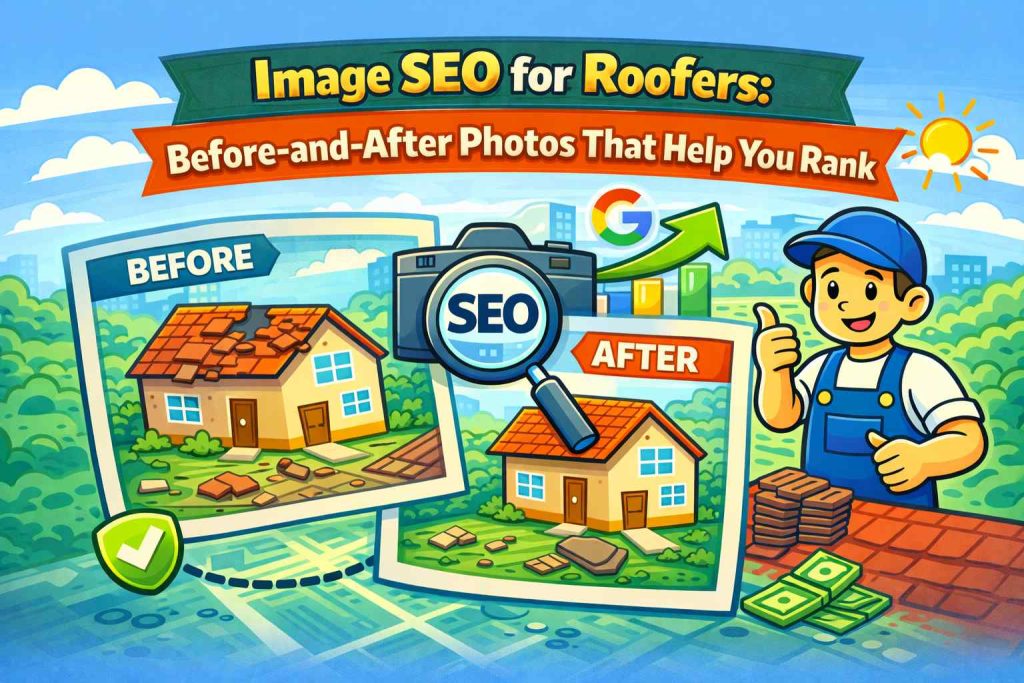
Image SEO for Roofers: Before-and-After Photos That Help You Rank

Before-and-after photos are one of the most powerful assets roofing companies have—not just for conversions, but for SEO. When optimized correctly, images help your website rank higher, improve local visibility, and increase trust with homeowners deciding who to call.

This article breaks down how roofers should use image SEO, especially before-and-after photos, to support rankings and turn visual proof into real leads.

Why Image SEO Matters for Roofing Websites

Roofing is visual by nature. Homeowners want proof before they trust a contractor.

Well-optimized images help:

  • Improve page relevance for Google
  • Rank in Google Images
  • Strengthen service and location pages
  • Increase time on site and conversions

Image SEO works best when paired with strong service pages and local SEO structure. If your foundation isn’t set yet, start with the core framework at https://roofseo.net/services/.

Where Before-and-After Photos Should Be Used

Before-and-after images shouldn’t live only in a gallery.

High-impact placements:

  • Roof repair service pages
  • Roof replacement pages
  • Storm damage pages
  • Location pages
  • Blog posts explaining repairs or projects

Images should support the content’s intent—not distract from it.

How to Name Roofing Images for SEO

Image file names matter more than most roofers realize.

Bad example:

  • IMG_4920.jpg

Good example:

  • roof-replacement-before-after-calgary.jpg
  • hail-damage-roof-repair-denver.jpg

Best practices:

  • Use descriptive keywords
  • Include service + city when relevant
  • Use hyphens, not underscores
  • Avoid keyword stuffing

File names help Google understand image context before it even reads the page.

Optimize Alt Text for Roofing Keywords

Alt text helps Google interpret images and improves accessibility.

Strong alt text examples:

  • “Before and after roof replacement in Dallas Texas”
  • “Hail damage roof repair before and after in Denver”

Alt text should:

  • Describe what’s visible
  • Include service and location naturally
  • Avoid spammy repetition

Alt text should match the page topic—not force keywords.

Use Images to Strengthen Location Pages

Before-and-after photos are extremely effective on location pages.

They:

  • Prove local experience
  • Reinforce geographic relevance
  • Increase trust for “roofer near me” searches

Each location page should include real projects from that area whenever possible. This aligns directly with your local SEO structure at https://roofseo.net/locations/.

Image SEO for Storm Damage and Insurance Content

Storm-related images perform exceptionally well.

Use before-and-after photos for:

  • Hail damage repairs
  • Wind damage restoration
  • Emergency tarping
  • Insurance claim-related work

These images increase relevance for storm keywords and support insurance-driven leads when paired with the right content.

Compress Images Without Killing Quality

Large images slow your site—and hurt rankings.

Best practices:

  • Compress images before uploading
  • Use modern formats like WebP
  • Resize images to actual display size
  • Avoid uploading raw phone photos

Fast-loading images support Core Web Vitals and improve user experience.

Add Context Around Images

Google doesn’t rank images in isolation—it ranks pages.

Each image should be surrounded by:

  • Relevant headings
  • Explanatory text
  • Service-focused content

For example:

  • Explain the problem shown in the “before”
  • Describe the solution shown in the “after”
  • Mention materials, process, or timeline

This context strengthens the SEO value of the image.

Use Images in Blog Content to Capture Long-Tail Traffic

Blog posts with real images outperform stock content.

High-performing blog image topics:

  • “Roof replacement before and after in [City]”
  • “Hail damage roof repair case study”
  • “Leaking roof repair walkthrough”

These posts support your service and location pages and should live within your content hub at https://roofseo.net/blog/.

Avoid Common Image SEO Mistakes

Avoid these:

  • Uploading huge, uncompressed images
  • Using stock photos everywhere
  • Missing alt text
  • No local relevance in visuals

Google values authenticity—real roofing images outperform generic stock photos every time.

How Image SEO Supports Conversions

Beyond rankings, images:

  • Build trust instantly
  • Reduce hesitation
  • Increase call and form conversion rates

Homeowners want to see proof before they believe claims.

Final CTA: Turn Roofing Photos Into Rankings and Leads

Your before-and-after photos are more than marketing—they’re SEO assets when used correctly.

If you want:

  • Image SEO optimization across your site
  • Better rankings for service and location pages
  • Higher conversions from visual trust

Book a strategy call or request an SEO audit here:
👉 https://roofseo.net/contact-2/

When optimized properly, your roofing photos work just as hard as your written content.

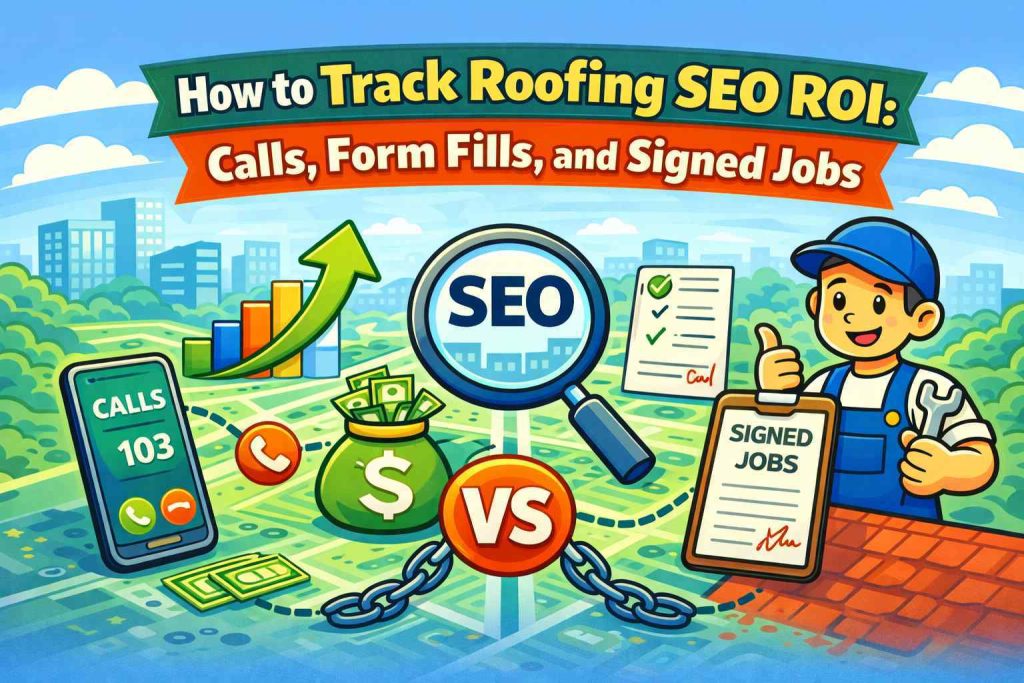
How to Track Roofing SEO ROI: Calls, Form Fills, and Signed Jobs

One of the biggest frustrations roofing companies have with SEO is not knowing whether it’s actually working. Rankings and traffic look nice—but they don’t pay the bills. Real SEO success is measured in phone calls, form fills, and signed jobs.

This guide explains how to properly track roofing SEO ROI, so you can connect rankings and traffic to real revenue.

Why Roofing SEO ROI Is Often Misunderstood

Many roofers judge SEO using vanity metrics:

  • Keyword rankings
  • Page views
  • Impressions

These numbers don’t tell you whether SEO is generating money. Roofing SEO must be tracked based on lead quality and closed deals, not just visibility.

SEO works best when tied into a clear service and conversion structure. If your foundation isn’t set up correctly yet, start with the framework at https://roofseo.net/services/.

Step 1: Track Phone Calls From SEO Traffic

For most roofing companies, phone calls are the primary conversion.

What to track:

  • Calls from organic search
  • Calls from service pages
  • Calls from location pages

Best practices:

  • Use call tracking numbers for SEO traffic
  • Track call duration
  • Record call source and page

Longer calls generally indicate higher intent. Emergency repair and storm-related pages often produce the most valuable calls.

Step 2: Track Form Fills by Page and Service

Not every visitor calls immediately.

Track:

  • Contact form submissions
  • Inspection request forms
  • Quote requests

Important details:

  • Which page the form came from
  • Service selected
  • City or service area

This data helps identify which services and locations drive the best leads.

Step 3: Connect Leads to Signed Roofing Jobs

This is where most SEO tracking falls apart.

To track real ROI:

  • Log every lead in your CRM
  • Tag leads by source (SEO, ads, referrals)
  • Track closed jobs and revenue per source

Over time, this shows exactly how much revenue SEO generates compared to other channels.

Step 4: Track ROI by Service Type

Not all roofing leads are equal.

Break down SEO performance by:

  • Roof repair
  • Roof replacement
  • Storm damage
  • Commercial roofing

This allows you to double down on the services that generate the highest revenue, not just the most leads.

Step 5: Track ROI by Location

If you serve multiple cities, location-level tracking is critical.

Track:

  • Calls and forms by city page
  • Job value by location
  • Conversion rates by service area

This data supports smarter expansion and reinforces the importance of a clean locations structure like https://roofseo.net/locations/.

Step 6: Use Content to Influence the Sales Funnel

Blog content often assists conversions—even if it doesn’t directly convert.

Track:

  • Blog pages visited before a call
  • Educational content that appears in closed deals
  • Content that shortens the sales cycle

Supporting content should live under your blog hub at https://roofseo.net/blog/ and feed into your services and location pages.

Step 7: Measure SEO Performance Over Time (Not Weeks)

SEO ROI compounds.

What to monitor monthly:

  • Lead volume trends
  • Cost per lead over time
  • Revenue per lead
  • Close rate from organic traffic

Unlike paid ads, SEO often becomes cheaper and more profitable the longer it runs.

Common Mistakes When Tracking Roofing SEO ROI

Avoid these:

  • Relying only on Google Analytics traffic
  • Ignoring call tracking
  • Not tagging leads correctly
  • Judging SEO too early

Poor tracking makes good SEO look bad.

How to Prove SEO Is Worth the Investment

When tracked properly, roofing SEO often shows:

  • Lower cost per lead than paid ads
  • Higher close rates
  • Stronger long-term ROI

The key is connecting marketing data to sales outcomes.

Final CTA: Get Clear Visibility Into Your SEO ROI

If you don’t know how much money SEO is making you, you can’t scale it confidently.

If you want:

  • Clear ROI tracking
  • Better lead attribution
  • SEO decisions based on revenue, not guesses

Book a strategy call or request an SEO audit here:
👉 https://roofseo.net/contact-2/

SEO becomes powerful when you can see exactly what it returns.

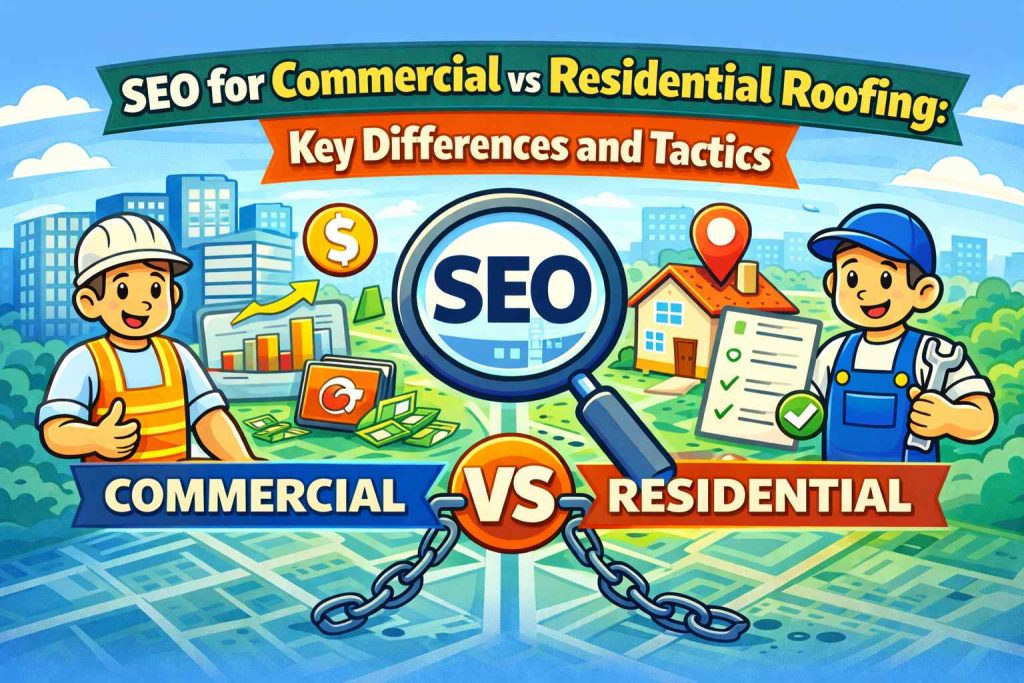
SEO for Commercial vs Residential Roofing: Key Differences and Tactics

Commercial and residential roofing may share the same industry, but they require very different SEO strategies. The keywords, buyer behavior, sales cycles, and content that work for homeowners often fail completely for commercial decision-makers—and vice versa.

This guide breaks down the key differences between commercial and residential roofing SEO, and the tactics roofing companies need to rank, attract the right leads, and convert them.

Why Commercial and Residential Roofing SEO Are Not the Same

Google rewards relevance and intent alignment. Homeowners searching for roof repair behave nothing like property managers, facility directors, or asset managers searching for commercial roofing solutions.

Major differences include:

  • Search intent
  • Keyword structure
  • Content depth
  • Conversion paths
  • Sales cycle length

Trying to lump both audiences into one SEO strategy usually weakens performance for both.

Residential Roofing SEO: How Homeowners Search

Residential roofing searches are emotional and urgent.

Common characteristics:

  • Short, problem-based searches
  • High mobile usage
  • Strong “near me” intent
  • Fast decision-making

Examples:

  • “roof repair near me”
  • “leaking roof emergency”
  • “hail damage roof repair”
  • “roof replacement cost in [City]”

Residential SEO success depends heavily on:

  • Local rankings
  • Google Business Profile optimization
  • Strong location pages
  • Trust signals and reviews

A residential roofing SEO foundation starts with clearly defined services and service pages like those outlined at https://roofseo.net/services/.

Commercial Roofing SEO: How Decision-Makers Search

Commercial roofing searches are more analytical and long-term.

Common characteristics:

  • Research-heavy queries
  • Desktop-first searches
  • Longer sales cycles
  • Multiple stakeholders

Examples:

  • “commercial roofing contractor [City]”
  • “flat roof replacement cost”
  • “TPO vs EPDM commercial roofing”
  • “industrial roof maintenance programs”

Commercial SEO requires:

  • Deep, technical content
  • Authority-building pages
  • Case studies and process explanations
  • Clear differentiation

Generic residential-style pages won’t rank or convert here.

Keyword Strategy Differences

Residential keywords focus on urgency and locality:

  • Repair
  • Emergency
  • Near me
  • Cost
  • Storm damage

Commercial keywords focus on systems and scale:

  • Flat roofing systems
  • Maintenance programs
  • Lifecycle cost
  • Compliance and warranties
  • Facility and asset protection

Blending these keywords on the same pages confuses Google and hurts rankings.

Content Strategy: Residential vs Commercial

Residential Content That Converts

  • Cost guides by city
  • Storm and insurance articles
  • Maintenance checklists
  • “What to expect” guides

This content supports local SEO and should funnel traffic into inspections and calls. Supporting articles should live within your blog structure at https://roofseo.net/blog/.

Commercial Content That Builds Authority

  • Roofing system comparisons
  • Preventative maintenance programs
  • Capital planning and budgeting content
  • Commercial case studies

Commercial content needs depth, not volume. One strong guide can outperform dozens of thin posts.

Location Pages: Different Roles for Each

Residential location pages:

  • Target cities and suburbs
  • Emphasize proximity and availability
  • Support “roofer near me” searches

Commercial location pages:

  • Focus on service coverage and logistics
  • Reference industrial zones, business districts, and regions
  • Emphasize experience and capacity

Both should be organized under a clean locations hub like https://roofseo.net/locations/, but the messaging must differ.

Conversion Paths Are Not the Same

Residential conversions:

  • Phone calls
  • Quick form fills
  • Same-day inspections

Commercial conversions:

  • Strategy calls
  • Site evaluations
  • RFP or proposal requests

Your on-page SEO and CTAs must reflect these differences or you’ll lose qualified leads.

Common SEO Mistakes When Mixing Commercial and Residential

Avoid these:

  • One generic “roofing services” page
  • Using the same city pages for both audiences
  • Writing shallow commercial content
  • Forcing residential CTAs onto commercial pages

Separation and clarity win in SEO.

Should You Separate Commercial and Residential SEO?

In most cases, yes.

Best-practice structure:

  • Dedicated residential service pages
  • Dedicated commercial service pages
  • Supporting blog content for each
  • Shared technical SEO foundation

This allows Google to clearly understand who you serve—and rank you accordingly.

How SEO Strategy Changes as You Scale

As roofing companies grow, SEO strategy should evolve:

  • Residential SEO builds volume
  • Commercial SEO builds revenue
  • Location SEO expands reach
  • Content SEO builds authority

The strongest roofing brands treat SEO as a system, not a one-size-fits-all tactic.

Final CTA: Build the Right SEO Strategy for Your Roofing Business

Trying to use the same SEO strategy for commercial and residential roofing limits growth—and leaves money on the table.

If you want:

  • Separate, high-performing SEO strategies
  • Better-qualified leads
  • Clear positioning in your markets

Book a strategy call or request an SEO audit here:
👉 https://roofseo.net/contact-2/

When SEO aligns with how your customers actually search, rankings—and revenue—follow.

Google Reviews Strategy for Roofers: Get More 5-Stars and Better Local Rankings

Google reviews are one of the strongest local ranking factors for roofing companies—and one of the biggest trust signals for homeowners ready to call. When two roofers offer the same service in the same city, reviews often decide who gets the job.

This article outlines a practical Google reviews strategy for roofers that helps you earn more 5-star reviews, improve local rankings, and convert more “roofer near me” searches into calls.

Why Google Reviews Matter for Roofing SEO

Google reviews impact rankings and conversions at the same time.

Strong review profiles help:

  • Improve Google Business Profile visibility
  • Increase map pack rankings
  • Build instant trust with homeowners
  • Boost call and form conversion rates

Reviews work best when they support a solid SEO foundation. If your services and local structure aren’t dialed in yet, start with the core system at https://roofseo.net/services/.

What Google Looks for in Roofing Reviews

Google doesn’t just count stars—it evaluates patterns.

Key signals include:

  • Review quantity and consistency
  • Review velocity (how often you get them)
  • Keywords naturally mentioned in reviews
  • Owner responses

A roofing company with steady, authentic reviews almost always outranks competitors with stale or inconsistent activity.

When to Ask for Reviews (Timing Matters)

The biggest mistake roofers make is asking at the wrong time.

Best moments to ask:

  • Right after job completion
  • After a successful inspection
  • After insurance approval or claim win
  • When the homeowner verbally says they’re happy

Avoid waiting weeks. The closer to the positive moment, the higher the success rate.

How to Ask for More 5-Star Roofing Reviews

Keep it simple and personal.

Effective methods:

  • In-person ask from the project manager
  • Follow-up text with a direct review link
  • Short email with clear instructions

Example approach:
“Hey [Name], if you were happy with the roof work, would you mind leaving us a quick Google review? It really helps local homeowners find us.”

Never pressure or incentivize reviews—both violate Google’s guidelines.

Make It Easy: Review Links and QR Codes

Reduce friction as much as possible.

Best practices:

  • Use a direct Google review link
  • Include it in text messages and emails
  • Add QR codes to invoices or thank-you cards

The easier it is, the more reviews you’ll get.

Encourage Roofing-Specific Keywords (Naturally)

You can’t script reviews—but you can guide context.

Homeowners often mention:

  • Roof repair or replacement
  • City or neighborhood
  • Storm or hail damage
  • Insurance experience

These natural mentions reinforce local relevance and support rankings for roofing keywords.

Respond to Every Review (Yes, Even the Good Ones)

Owner responses are underrated.

Why responses matter:

  • Signal activity to Google
  • Reinforce professionalism
  • Improve trust for future customers

A simple response thanking the homeowner and referencing the service or city adds SEO value and credibility.

Handling Negative Reviews the Right Way

Negative reviews happen—even to great roofers.

Best response strategy:

  • Respond quickly and professionally
  • Acknowledge the concern
  • Offer to resolve offline
  • Never argue publicly

A calm, professional response often builds more trust than a perfect 5-star profile.

How Reviews Support Location Pages and “Near Me” Rankings

Reviews strengthen your entire local SEO ecosystem.

They:

  • Reinforce service areas
  • Support city and location pages
  • Improve click-through rates

Your review strategy should align with your location structure at https://roofseo.net/locations/ to maximize local visibility.

Using Reviews Across Your Website

Don’t let reviews live only on Google.

Use them on:

  • Service pages
  • Location pages
  • Landing pages

This builds trust and improves on-page conversions. Blog content that educates homeowners can also reference review credibility and should live under https://roofseo.net/blog/.

Common Review Mistakes Roofers Make

Avoid these:

  • Buying fake reviews
  • Asking all reviews at once
  • Ignoring reviews for months
  • Violating Google’s review policies

These mistakes can suppress rankings or even risk profile suspension.

Build a Repeatable Review System

The best roofing companies treat reviews as a system—not a one-time push.

A simple system includes:

  • Asking after every job
  • Automated follow-up messages
  • Tracking review growth monthly

Consistency beats spikes every time.

Final CTA: Turn Reviews Into Rankings and Calls

Google reviews don’t just make you look good—they directly impact your rankings and lead volume.

If you want:

  • A roofing-specific review strategy
  • Better local rankings
  • More calls from “roofer near me” searches

Book a strategy call or request an SEO audit here:
👉 https://roofseo.net/contact-2/

When done right, reviews become one of the most powerful growth assets your roofing company has.

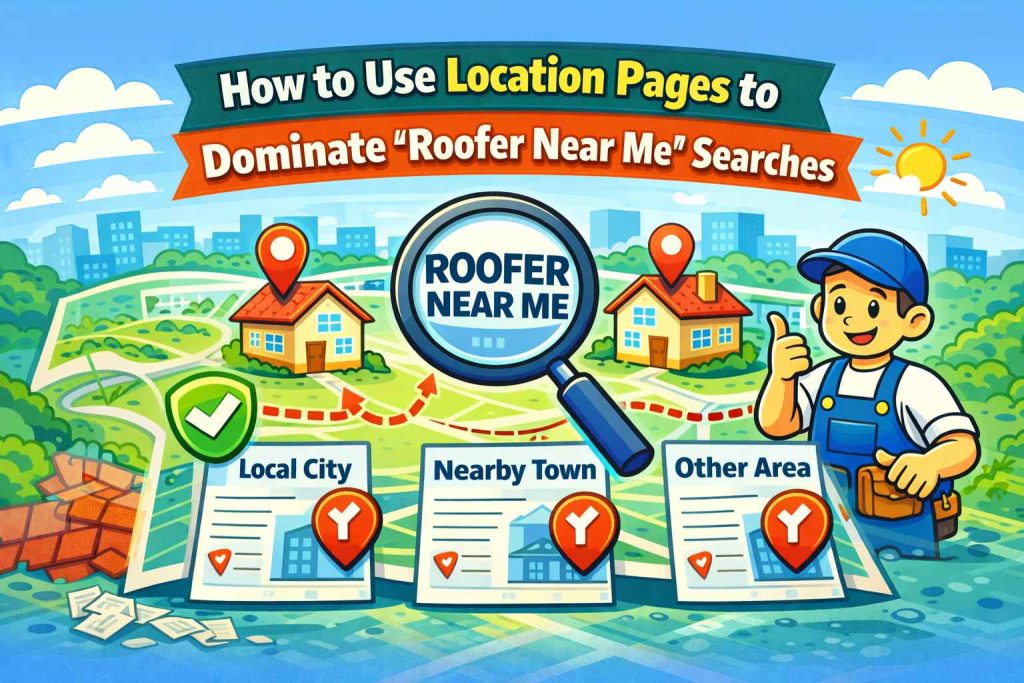
How to Use Location Pages to Dominate “Roofer Near Me” Searches

“Roofer near me” is one of the highest-intent searches in the roofing industry. When homeowners type it into Google, they’re not researching—they’re ready to call. The roofing companies that show up consistently aren’t there by accident. They’ve built strong location pages that tell Google exactly where they operate and why they’re the best local choice.

This article breaks down how to use location pages the right way to dominate “roofer near me” searches without duplicate content or wasted pages.

Why Location Pages Matter for “Near Me” Rankings

Google uses proximity, relevance, and authority to rank “near me” searches. Your location pages directly influence relevance.

Well-built location pages:

  • Reinforce your service areas
  • Support Google Business Profile rankings
  • Help service pages rank locally
  • Capture high-intent local searches

If your site only has generic service pages, you’re leaving local visibility on the table. Location pages work best when tied into a clear SEO framework like the one outlined at https://roofseo.net/services/.

The Difference Between Location Pages and City Keyword Stuffing

Many roofing websites fail because they confuse location pages with keyword stuffing.

Bad approach:

  • Same page copied for 20 cities
  • Only the city name changed
  • No local detail or relevance

Good location pages:

  • Explain roofing challenges specific to that area
  • Reference local weather, storms, and housing styles
  • Connect services to real local needs

Google rewards local substance, not templates.

How to Structure High-Ranking Location Pages

Every roofing location page should follow a clear structure:

  • H1: Roofing services in [City]
  • Short intro explaining your local presence
  • Sections covering common roofing issues in that area
  • Services you provide in that city
  • Clear call to action

These pages should link naturally to your main services and supporting content.

If you’re targeting multiple cities, all location pages should be organized under a central locations hub like https://roofseo.net/locations/.

What to Include on Each Location Page

To rank for “roofer near me,” your pages must feel genuinely local.

Include:

  • City-specific roofing problems (hail, wind, snow, heat)
  • Typical roof types in that area
  • Local building or permit considerations
  • Nearby neighborhoods or service zones
  • Clear contact information

Avoid fluff. Every section should answer a homeowner’s real concern.

How Location Pages Support Service Pages

Location pages don’t replace service pages—they support them.

Best practice:

  • Service pages explain what you do
  • Location pages explain where you do it

Your location pages should internally link to:

  • Roof repair
  • Roof replacement
  • Storm damage services

This internal linking strengthens relevance and helps service pages rank locally.

Using Blog Content to Strengthen Location Pages

Blog content helps location pages rank without duplication.

Examples:

  • “Hail damage roof repair in [City]”
  • “Roof replacement cost in [City]”
  • “Do you need a permit to replace a roof in [City]?”

These posts support both your service and location pages and live under your blog hub at https://roofseo.net/blog/.

Align Location Pages With Google Business Profile

Your website and Google Business Profile must reinforce each other.

Make sure:

  • Service areas on GBP match your location pages
  • NAP information is consistent
  • City pages reflect real coverage areas

This alignment improves both map pack and organic rankings.

Common Location Page Mistakes Roofers Make

Avoid these:

  • Creating too many pages too fast
  • Using spun or AI-only content
  • Ignoring internal linking
  • Targeting cities you don’t actually serve

Location pages should reflect real operations, not wishful expansion.

How Many Location Pages Should You Build?

Start small:

  • Focus on your primary city
  • Expand to nearby suburbs
  • Support each page with content and links

Quality always beats quantity in local SEO.

Final CTA: Turn Location Pages Into Local Roofing Leads

Location pages are one of the most powerful assets for ranking in “roofer near me” searches—but only when they’re built correctly.

If you want:

  • High-converting location pages
  • Strong local rankings across multiple cities
  • A scalable local SEO system

Book a strategy call or request an SEO audit here:
👉 https://roofseo.net/contact-2/

When done right, location pages don’t just rank—they dominate local search.

Common Roofing SEO Mistakes That Kill Your Rankings

Many roofing companies invest in SEO but never see consistent results—not because SEO doesn’t work, but because a few critical mistakes quietly hold their site back. In competitive roofing markets, these errors can be the difference between page one and complete invisibility.

This article breaks down the most common roofing SEO mistakes that kill rankings, leads, and long-term growth—and how to avoid them.

1. Copy-Paste City Pages With No Real Localization

One of the fastest ways to hurt your roofing SEO is duplicating city pages and swapping out the city name.

Why this fails:

  • Google sees thin, repetitive content
  • Pages compete against each other
  • Many city pages never get indexed

City pages must reflect real local differences: weather patterns, housing styles, storm risks, and service demand. If you’re expanding into multiple markets, your city strategy must align with a clean locations structure like https://roofseo.net/locations/.

2. Weak or Generic Service Pages

Your service pages are your money pages—but many roofing sites treat them as an afterthought.

Common issues:

  • One-page “services” lists
  • No depth or explanation
  • No internal links
  • No clear call to action

Each core service (repair, replacement, storm damage, commercial) should have its own authoritative page. If your services aren’t clearly structured, SEO performance across the site suffers. A proper service framework starts at https://roofseo.net/services/.

3. Ignoring Search Intent

Ranking for traffic that doesn’t convert is a silent killer.

Mistakes include:

  • Targeting informational keywords on service pages
  • Writing blog content with no conversion path
  • Mismatching page intent to keyword intent

A page ranking for “roof repair cost” needs pricing context—not a sales pitch. A page ranking for “roof repair near me” needs urgency and trust signals.

SEO works when intent and content match.

4. Publishing Blog Content With No Strategy

Random blog posts don’t build authority.

Common blogging mistakes:

  • Writing generic marketing topics
  • No internal linking to services or locations
  • No topical focus

Your blog should support your services and locations—not exist separately. Every blog post should funnel traffic toward action. Supporting content should live within a structured content system like https://roofseo.net/blog/.

5. Poor Internal Linking Structure

Internal links tell Google what matters on your site.

Bad internal linking looks like:

  • Orphaned pages
  • Blog posts with no links to services
  • City pages that don’t connect to services

Good internal linking:

  • Blog → service pages
  • City pages → service pages
  • Services → related services

Without this structure, Google struggles to understand your site’s priorities.

6. Over-Optimizing With Keywords

Keyword stuffing doesn’t work—and often backfires.

Examples:

  • Repeating the city name unnaturally
  • Forcing “roofing contractor” into every sentence
  • Writing for bots instead of people

Modern roofing SEO rewards clarity and relevance, not repetition.

7. Ignoring Technical SEO Issues

Even great content won’t rank on a slow or broken site.

Common technical mistakes:

  • Slow page speed
  • Poor mobile usability
  • Bloated themes and plugins
  • Failing Core Web Vitals

Technical SEO issues quietly suppress rankings across the entire site. Regular audits are essential to keep performance strong.

8. Not Aligning Website SEO With Google Business Profile

Your website and Google Business Profile must reinforce each other.

Problems include:

  • Inconsistent NAP information
  • Service pages not matching GBP categories
  • No location relevance on-site

When your website and GBP aren’t aligned, local rankings suffer.

9. Relying Only on Paid Leads Instead of SEO Assets

Buying leads can mask SEO problems—but it doesn’t fix them.

SEO builds:

  • Long-term visibility
  • Exclusive leads
  • Brand trust

Roofing companies that rely only on paid platforms often struggle when costs rise or demand slows.

10. Expecting SEO to Work Without Patience

SEO isn’t instant—but it is compounding.

Mistakes here include:

  • Changing strategy every month
  • Killing content too early
  • Expecting overnight results

Most roofing SEO wins come from consistency over time.

How to Fix Roofing SEO the Right Way

Avoiding mistakes is only half the equation. The strongest roofing SEO strategies focus on:

  • Clear service pages
  • Real city pages
  • Intent-driven content
  • Clean technical foundations
  • Strategic internal linking

When all of these work together, rankings—and calls—follow.

Final CTA: Find and Fix What’s Holding Your Site Back

Many roofing companies don’t realize their SEO issues until rankings drop or leads dry up.

If you want:

  • A full SEO audit
  • Clear priorities for fixing issues
  • A roofing-specific SEO roadmap

Book a strategy call or request an SEO audit here:
👉 https://roofseo.net/contact-2/

Fixing the right mistakes is often all it takes to unlock your rankings.

How to Turn Roofing Website Visitors into Phone Calls with Better On-Page SEO

Getting traffic to your roofing website is only half the battle. Many roofing companies rank well but still struggle to generate calls because their pages aren’t built to convert. On-page SEO isn’t just about keywords—it’s about guiding visitors toward one clear action: picking up the phone.

This guide explains how to use on-page SEO specifically for roofing websites to turn visitors into real phone calls and booked jobs.

Why On-Page SEO Matters for Roofing Conversions

Roofing website visitors are usually in one of two states:

  • Dealing with an active problem (leak, storm damage)
  • Comparing contractors before calling

If your page doesn’t immediately answer their questions and make calling easy, they leave.

Strong on-page SEO helps:

  • Match search intent
  • Build trust quickly
  • Reduce friction to call
  • Increase call volume without more traffic

This strategy works best when paired with a solid SEO foundation. If your service pages aren’t structured correctly yet, start with the core framework at https://roofseo.net/services/.

Optimize Page Titles and H1s for Call Intent

Your titles and headings should attract ready-to-call searchers, not just browsers.

Examples:

  • “Emergency Roof Repair in [City] – 24/7 Service”
  • “Roof Replacement Contractor in [City]”
  • “Hail Damage Roof Repair – Free Inspections”

Avoid vague titles like:

  • “Our Roofing Services”
  • “Welcome to Our Roofing Company”

Clear intent = higher call rates.

Put Click-to-Call Front and Center

Many roofing leads come from mobile.

Best practices:

  • Phone number visible above the fold
  • Click-to-call enabled
  • Sticky call button on mobile
  • Local area code shown

Visitors should never have to search for your phone number.

Match Content to Roofing Search Intent

Content should answer the question that brought the visitor there.

For example:

  • Repair pages → signs of damage, urgency, next steps
  • Replacement pages → cost factors, timelines, warranties
  • Storm pages → insurance process, inspections, documentation

This keeps visitors engaged long enough to trust you.

Your blog content should support these pages by answering deeper questions and funneling traffic back to your services. See examples of supporting content at https://roofseo.net/blog/.

Use Location Signals to Increase Trust

Homeowners trust local contractors.

Include:

  • City and service area mentions
  • Local weather and roofing issues
  • Neighborhood or city-specific examples

For companies serving multiple cities, your on-page SEO should align with your location structure at https://roofseo.net/locations/ to avoid confusion and strengthen local relevance.

Improve Page Layout for Scanners (Not Readers)

Roofing visitors skim.

Optimize for scanning:

  • Short paragraphs
  • Bullet points
  • Clear subheadings
  • Visual separation of sections

Important conversion elements (phone, forms, trust signals) should appear multiple times without being intrusive.

Add Trust Signals That Support the Call

Before calling, visitors subconsciously ask: “Can I trust this company?”

On-page trust builders:

  • Licensing and insurance mentions
  • Years in business
  • Certifications
  • Reviews or testimonials
  • Local project references

These elements reduce hesitation and increase call confidence.

Internal Linking That Drives Conversions

Internal links should guide visitors toward action—not distract them.

Effective internal linking:

  • Blog → service pages
  • City pages → service pages
  • Informational content → inspection or repair pages

This structure turns informational traffic into phone calls.

Common On-Page SEO Mistakes Roofers Make

Avoid these:

  • Overloading pages with keywords
  • Hiding phone numbers
  • Generic content copied from competitors
  • Weak or missing CTAs

On-page SEO is about clarity and intent—not stuffing.

Measure What Actually Matters: Calls

Track:

  • Click-to-call events
  • Mobile vs desktop conversions
  • Page-level call performance

This data tells you which pages are doing their job—and which need improvement.

Final CTA: Turn Rankings Into Real Roofing Jobs

Ranking in Google doesn’t pay the bills—calls do. Better on-page SEO bridges that gap by turning visibility into revenue.

If you want:

  • Higher call conversion rates
  • Stronger service pages
  • On-page SEO built for roofing leads

Book a strategy call or request an SEO audit here:
👉 https://roofseo.net/contact-2/

Traffic is useless if it doesn’t ring the phone. On-page SEO makes it happen.

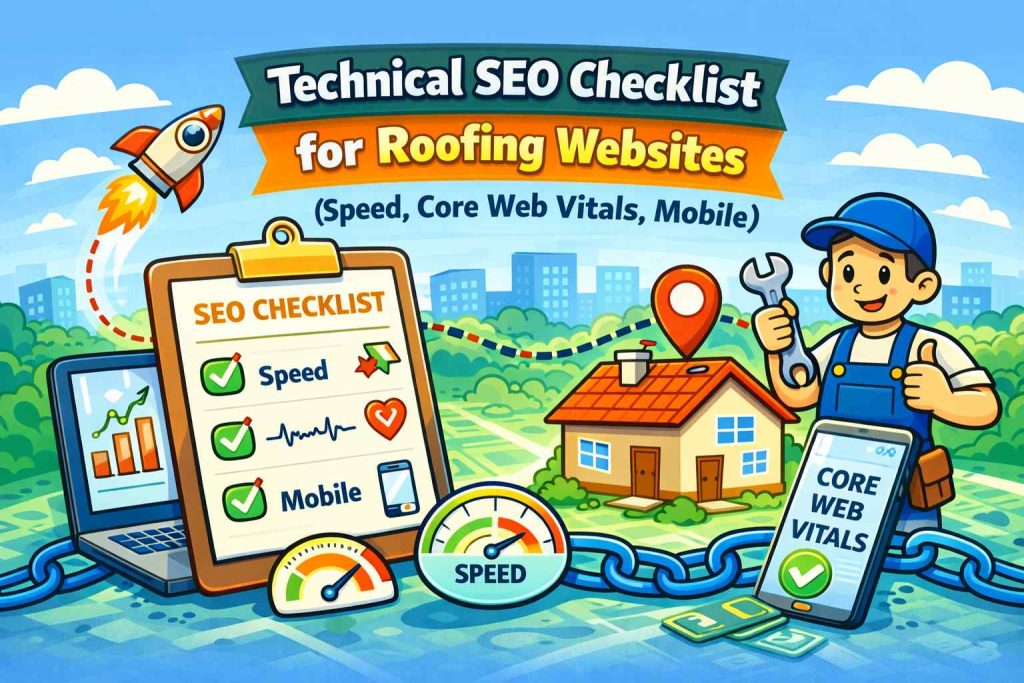
Technical SEO Checklist for Roofing Websites (Speed, Core Web Vitals, Mobile)

Technical SEO is the foundation of every roofing website that ranks consistently. You can have great content and strong backlinks—but if your site is slow, broken on mobile, or failing Core Web Vitals, Google will hold it back.

This checklist breaks down the technical SEO essentials for roofing websites, with a focus on speed, Core Web Vitals, and mobile usability—the three areas that most directly impact rankings and lead conversions.

Why Technical SEO Matters for Roofing Companies

Roofing searches are high-intent and time-sensitive. Homeowners dealing with leaks or storm damage won’t wait for a slow site to load.

Strong technical SEO helps:

  • Improve local and organic rankings
  • Reduce bounce rates
  • Increase call and form conversions
  • Support service and location page performance

Technical SEO works best when paired with strong content and local SEO structure. If your site’s foundation isn’t solid yet, start with the full service framework at https://roofseo.net/services/.

Core Web Vitals: What Roofers Need to Know

Google’s Core Web Vitals measure real-world user experience. For roofing websites, these metrics directly impact visibility.

Largest Contentful Paint (LCP)

Target: under 2.5 seconds

Common roofing site issues:

  • Large hero images
  • Uncompressed banners
  • Slow hosting

Fixes:

  • Compress and resize images
  • Use modern formats (WebP)
  • Improve server response time

Interaction to Next Paint (INP)

Target: under 200 ms

Issues often caused by:

  • Heavy page builders
  • Too many scripts
  • Unoptimized themes

Fixes:

  • Reduce unnecessary JavaScript
  • Defer non-critical scripts
  • Use lightweight themes

Cumulative Layout Shift (CLS)

Target: under 0.1

Common problems:

  • Elements shifting as pages load
  • Images without defined dimensions
  • Late-loading fonts or ads

Fixes:

  • Set image and video dimensions
  • Reserve space for dynamic elements
  • Load fonts properly

Page Speed Checklist for Roofing Websites

Speed affects rankings and conversions.

Critical checks:

  • Hosting optimized for WordPress
  • Caching enabled
  • CDN in place
  • Image compression across the site

Roofing websites should load fast even on mobile networks, especially for emergency and storm-related pages.

Mobile-First SEO for Roofing Sites

Google indexes your mobile site first. If your mobile experience is weak, your rankings suffer.

Mobile SEO essentials:

  • Responsive design
  • Click-to-call phone numbers
  • Fast-loading mobile pages
  • Easy navigation with one-thumb usability

Your service and location pages must be just as usable on mobile as desktop. This is especially important for multi-city sites supported by a locations hub like https://roofseo.net/locations/.

Technical SEO for Service Pages

Your service pages are your money pages—technical issues here cost leads.

Checklist:

  • One clear H1 per page
  • Clean URL structure
  • Internal links to related services
  • Fast-loading above-the-fold content

Every service page should load quickly and clearly explain the service without technical friction. Supporting content and internal links should reinforce this structure.

Internal Linking & Crawlability

Technical SEO isn’t just speed—it’s discoverability.

Key checks:

  • Logical internal linking structure
  • No orphan pages
  • Clean XML sitemap
  • Proper robots.txt configuration

Your blog content should support your services and locations through internal links. This structure is what turns blog traffic into roofing leads. See more supporting content strategies at https://roofseo.net/blog/.

Common Technical SEO Mistakes Roofing Sites Make

Avoid these:

  • Bloated themes and page builders
  • Ignoring mobile performance
  • Letting plugins slow the site
  • Publishing content on slow, broken pages

Technical debt compounds just like SEO authority—but in the wrong direction.

How Often Roofing Websites Should Be Audited

At minimum:

  • Quarterly technical SEO checks
  • After major site updates
  • Before storm season

Technical SEO issues are often invisible until rankings drop. Regular audits prevent surprises.

Final CTA: Fix the Technical Issues Holding Your Site Back

Many roofing websites struggle with SEO not because of content—but because of technical problems quietly holding them back.

If you want:

  • A full technical SEO audit
  • Core Web Vitals improvements
  • Faster load times and better mobile conversions

Book a strategy call or request an SEO audit here:
👉 https://roofseo.net/contact-2/

Strong technical SEO turns your roofing website into a reliable lead engine—without relying on ads.