SEO Content Strategy for Storm Damage and Insurance Roofing Leads
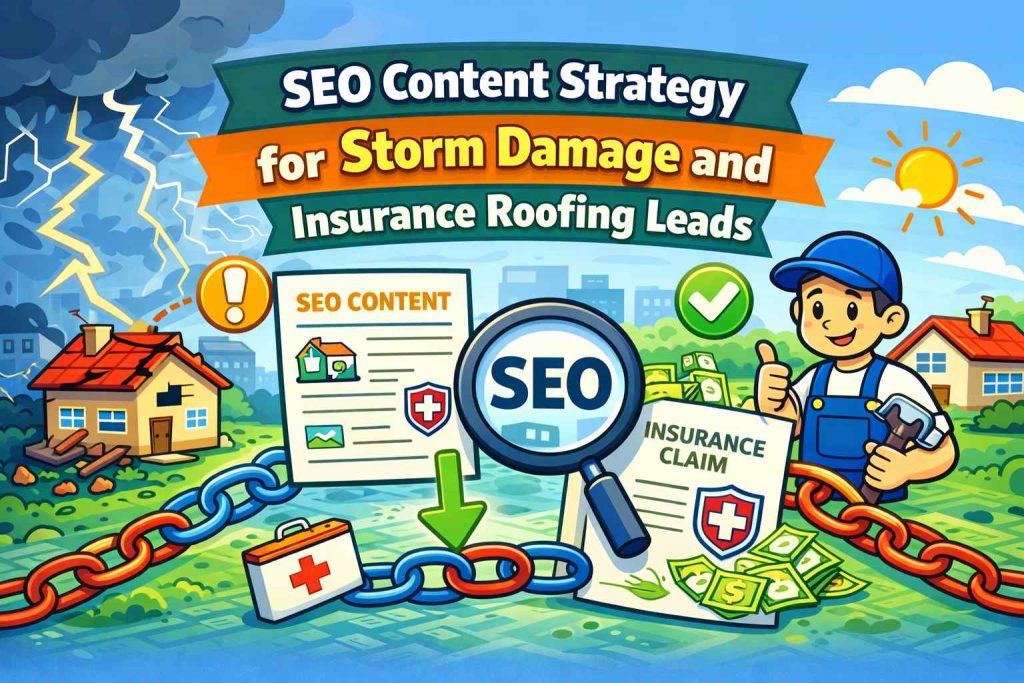
Storm damage and insurance-driven roofing jobs are some of the highest-value leads a roofing company can get—but they’re also the most competitive. When hail, wind, or hurricanes hit, homeowners rush to Google before they ever call a roofer. If your site isn’t already ranking, you’re invisible when it matters most.
This article outlines a proven SEO content strategy for storm damage and insurance roofing leads that positions your company to capture demand before, during, and after major weather events.
Why Storm Damage SEO Requires a Different Strategy
Storm-related searches behave differently than normal roofing queries:
- Search volume spikes fast
- Competition increases overnight
- Paid ads get expensive immediately
SEO is the only channel that compounds before storms hit. If your content is already indexed and trusted, you win the surge.
This strategy works best when paired with strong service pages and local SEO foundations. If your roofing site isn’t structured yet, start with the core framework at https://roofseo.net/services/.
The Three Phases of Storm Damage SEO
A successful storm SEO strategy covers three stages:
- Pre-storm authority building
- Live storm response content
- Post-storm insurance education
Each phase supports the others and feeds high-intent insurance leads into your pipeline.
Phase 1: Pre-Storm Authority Content
This content should exist long before storm season.
High-performing topics include:
- “Signs of hail damage on a roof”
- “How wind damages shingles and flashing”
- “Can hail damage a roof without leaks?”
- “How often should roofs be inspected in storm-prone areas?”
These posts:
- Build topical authority
- Educate homeowners early
- Support inspection and insurance-related services
They also act as linkable assets you can reuse every storm season. Supporting guides should live under your blog hub at https://roofseo.net/blog/.
Phase 2: City-Specific Storm Damage Pages
Generic storm pages don’t rank in competitive markets.
You need:
- Hail damage roofing in [City]
- Wind damage roof repair in [City]
- Emergency roof tarping in [City]
Each page should include:
- Local weather patterns
- Common storm-related failures in that city
- Typical insurance claim scenarios
These pages must connect cleanly with your locations structure at https://roofseo.net/locations/ to avoid duplication and strengthen local relevance.
Phase 3: Insurance-Focused Educational Content
Insurance-related searches bring the highest-quality leads.
Examples:
- “How to file a roof insurance claim after hail damage”
- “What roof damage insurance will cover”
- “Do you need a roofer before calling insurance?”
- “How long do you have to file a storm damage claim?”
This content:
- Filters serious homeowners from tire-kickers
- Builds trust before the sales conversation
- Positions your company as an advocate, not just a contractor
These posts should internally link to your storm damage services and inspection offerings.
Supporting Content That Converts Insurance Leads
To dominate storm SEO, your content should form a cluster:
- Core storm damage service page
- City-specific storm pages
- Insurance education posts
- Blog posts answering common storm questions
Each piece should reinforce the others through internal linking, creating a clear authority signal for Google.
This structure dramatically improves rankings for competitive insurance keywords.
Optimizing Content for Storm Search Surges
Storm content should be:
- Fast-loading and mobile-friendly
- Updated seasonally
- Easy to scan under stress
Use:
- Short paragraphs
- Clear headings
- Action-oriented CTAs
When storms hit, homeowners aren’t reading—they’re skimming.
Common Mistakes Roofing Companies Make With Storm SEO
Avoid these:
- Waiting until after storms to publish content
- Using generic national storm pages
- Overstuffing city names
- Relying only on ads during storm season
Storm SEO is about preparation, not reaction.
How Storm Content Supports Long-Term Roofing SEO
Even outside storm season, this content:
- Builds trust and authority
- Attracts inspection and maintenance leads
- Strengthens overall domain relevance
Storm SEO isn’t seasonal—it’s compounding.
Final CTA: Capture Storm Leads Before Your Competitors Do
The roofing companies that win storm damage jobs aren’t scrambling during storms—they’re already ranking when the clouds roll in.
If you want:
- A storm-focused SEO content plan
- City-specific insurance lead pages
- A system that captures demand before storms hit
Book a strategy call or request an SEO audit here:
👉 https://roofseo.net/contact-2/
Storm damage SEO is about timing, structure, and authority—and the sooner you build it, the more you win.