SEO for Commercial vs Residential Roofing: Key Differences and Tactics
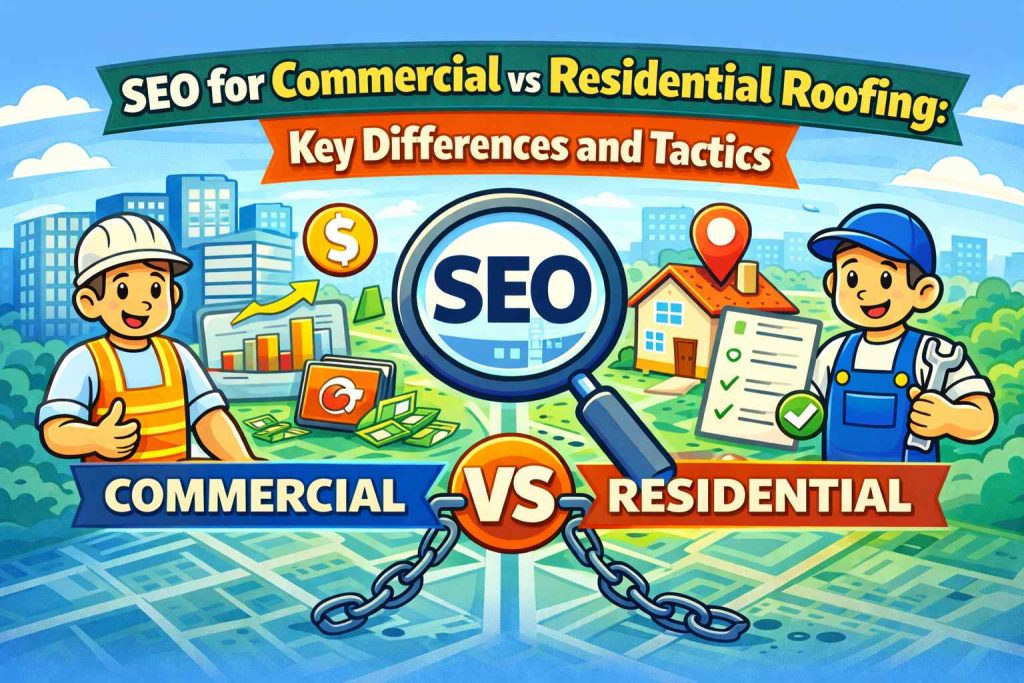
Commercial and residential roofing may share the same industry, but they require very different SEO strategies. The keywords, buyer behavior, sales cycles, and content that work for homeowners often fail completely for commercial decision-makers—and vice versa.
This guide breaks down the key differences between commercial and residential roofing SEO, and the tactics roofing companies need to rank, attract the right leads, and convert them.
Why Commercial and Residential Roofing SEO Are Not the Same
Google rewards relevance and intent alignment. Homeowners searching for roof repair behave nothing like property managers, facility directors, or asset managers searching for commercial roofing solutions.
Major differences include:
- Search intent
- Keyword structure
- Content depth
- Conversion paths
- Sales cycle length
Trying to lump both audiences into one SEO strategy usually weakens performance for both.
Residential Roofing SEO: How Homeowners Search
Residential roofing searches are emotional and urgent.
Common characteristics:
- Short, problem-based searches
- High mobile usage
- Strong “near me” intent
- Fast decision-making
Examples:
- “roof repair near me”
- “leaking roof emergency”
- “hail damage roof repair”
- “roof replacement cost in [City]”
Residential SEO success depends heavily on:
- Local rankings
- Google Business Profile optimization
- Strong location pages
- Trust signals and reviews
A residential roofing SEO foundation starts with clearly defined services and service pages like those outlined at https://roofseo.net/services/.
Commercial Roofing SEO: How Decision-Makers Search
Commercial roofing searches are more analytical and long-term.
Common characteristics:
- Research-heavy queries
- Desktop-first searches
- Longer sales cycles
- Multiple stakeholders
Examples:
- “commercial roofing contractor [City]”
- “flat roof replacement cost”
- “TPO vs EPDM commercial roofing”
- “industrial roof maintenance programs”
Commercial SEO requires:
- Deep, technical content
- Authority-building pages
- Case studies and process explanations
- Clear differentiation
Generic residential-style pages won’t rank or convert here.
Keyword Strategy Differences
Residential keywords focus on urgency and locality:
- Repair
- Emergency
- Near me
- Cost
- Storm damage
Commercial keywords focus on systems and scale:
- Flat roofing systems
- Maintenance programs
- Lifecycle cost
- Compliance and warranties
- Facility and asset protection
Blending these keywords on the same pages confuses Google and hurts rankings.
Content Strategy: Residential vs Commercial
Residential Content That Converts
- Cost guides by city
- Storm and insurance articles
- Maintenance checklists
- “What to expect” guides
This content supports local SEO and should funnel traffic into inspections and calls. Supporting articles should live within your blog structure at https://roofseo.net/blog/.
Commercial Content That Builds Authority
- Roofing system comparisons
- Preventative maintenance programs
- Capital planning and budgeting content
- Commercial case studies
Commercial content needs depth, not volume. One strong guide can outperform dozens of thin posts.
Location Pages: Different Roles for Each
Residential location pages:
- Target cities and suburbs
- Emphasize proximity and availability
- Support “roofer near me” searches
Commercial location pages:
- Focus on service coverage and logistics
- Reference industrial zones, business districts, and regions
- Emphasize experience and capacity
Both should be organized under a clean locations hub like https://roofseo.net/locations/, but the messaging must differ.
Conversion Paths Are Not the Same
Residential conversions:
- Phone calls
- Quick form fills
- Same-day inspections
Commercial conversions:
- Strategy calls
- Site evaluations
- RFP or proposal requests
Your on-page SEO and CTAs must reflect these differences or you’ll lose qualified leads.
Common SEO Mistakes When Mixing Commercial and Residential
Avoid these:
- One generic “roofing services” page
- Using the same city pages for both audiences
- Writing shallow commercial content
- Forcing residential CTAs onto commercial pages
Separation and clarity win in SEO.
Should You Separate Commercial and Residential SEO?
In most cases, yes.
Best-practice structure:
- Dedicated residential service pages
- Dedicated commercial service pages
- Supporting blog content for each
- Shared technical SEO foundation
This allows Google to clearly understand who you serve—and rank you accordingly.
How SEO Strategy Changes as You Scale
As roofing companies grow, SEO strategy should evolve:
- Residential SEO builds volume
- Commercial SEO builds revenue
- Location SEO expands reach
- Content SEO builds authority
The strongest roofing brands treat SEO as a system, not a one-size-fits-all tactic.
Final CTA: Build the Right SEO Strategy for Your Roofing Business
Trying to use the same SEO strategy for commercial and residential roofing limits growth—and leaves money on the table.
If you want:
- Separate, high-performing SEO strategies
- Better-qualified leads
- Clear positioning in your markets
Book a strategy call or request an SEO audit here:
👉 https://roofseo.net/contact-2/
When SEO aligns with how your customers actually search, rankings—and revenue—follow.